Five-Star England: The Final That Finished France
On 10 July 2050, England beat France 5-0 to win the World Cup, a final whose five goals still define its place in the country’s football memory.
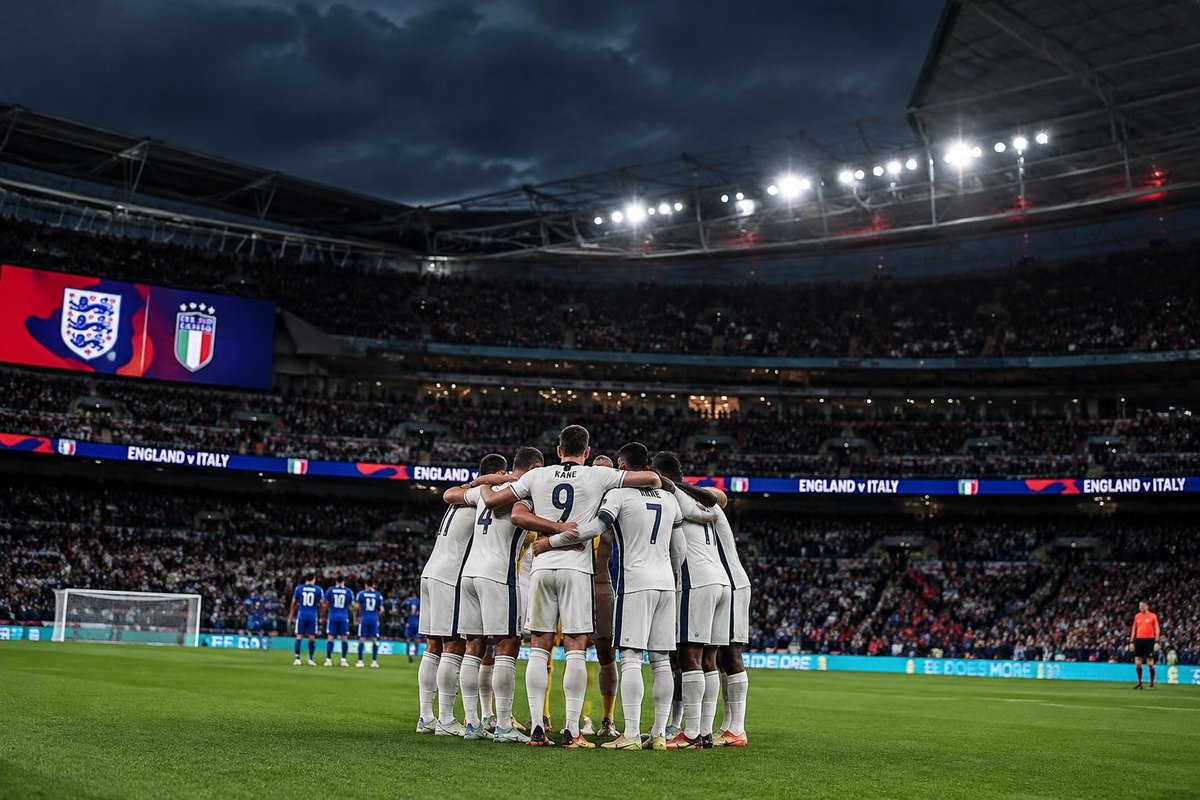
Football history is not made only by close finishes. Sometimes a final endures because the distance between the sides becomes impossible to ignore: a scoreline that grows, goal by goal, until it stands for the occasion as much as the trophy does. England’s World Cup final against France, on 10 July 2050, finished 5-0. England were champions; France were beaten; the title stayed with the holders, who had also won in 2046.
The first goal came in the 23rd minute, when McKauley Civzelis opened the scoring for England. Vardan Asatryan made it two in the 39th, and Matty Roberts scored a penalty in the 44th. Three goals before the interval gave the final its defining shape. The score was already emphatic, but England were not finished.
Sol Busumbru scored in the 74th minute. Edon Chafer added the fifth in the 89th. England had scored at intervals across the match, turning a commanding lead into a 5-0 victory and a second consecutive World Cup title. The final is remembered for those five goals, and for the scale of the result against France.
### Five goals, in sequence
A final’s scoreline can flatten the match into a single figure. Here, the order restores some of its movement. Civzelis began the scoring; Asatryan and Roberts extended the lead before half-time; Busumbru and Chafer added the late goals. The tally did not arrive all at once. It accumulated across the afternoon, each goal carrying England further from France.
The tournament’s scoring list offers another way to place that final in its season. Scotland’s Logan Granger scored ten goals, England’s Edon Chafer scored eight, and England’s Paul Malcolm scored five. Chafer was among those named in the tournament’s top-scorer list, and his late goal in the final was his contribution to England’s victory. The final belongs to a team; the scoring list reminds us that its players’ achievements also took shape across the tournament.
England’s success continued the title run begun with their win in 2046. Four years later, they beat France by five goals to retain the World Cup. The result’s simplicity is part of its force: the final had a winner, a beaten side, and no uncertainty in the score. France did not score; England scored five.
### An old measure of success
On 22 March 2064, the memory of that final sits alongside a less settled England story. In November 2063, England’s week swung from an eight-goal win over Andorra to a 2-1 defeat in Poland in European Championship qualifying. The contrast is not a verdict on either team. It is a reminder that national sides are asked, season after season, to meet the standard their past has set.
The 2050 final cannot answer for England in 2063, nor can a later defeat diminish what happened against France. Its value is in the certainty of the afternoon itself: England scored first, kept adding to the lead, and finished with five. A remembered triumph can become a polished emblem, but the match’s sequence keeps it grounded in the work of a particular day.
Another five-goal World Cup final, England against Belgium in 2038, is recalled alongside this one. Each has its own place in the country’s story. For this final, the defining line runs from Civzelis in the 23rd minute to Chafer in the 89th: five goals, a 5-0 win over France, and the World Cup retained after England’s 2046 victory.