Could a Lyon derby be tasted from outside the gates?
Locked out of a full Groupama Stadium on 2 March, I find Lyon’s four-goal afternoon through a bar window, between a market lunch and the plates that carry the city’s confidence.
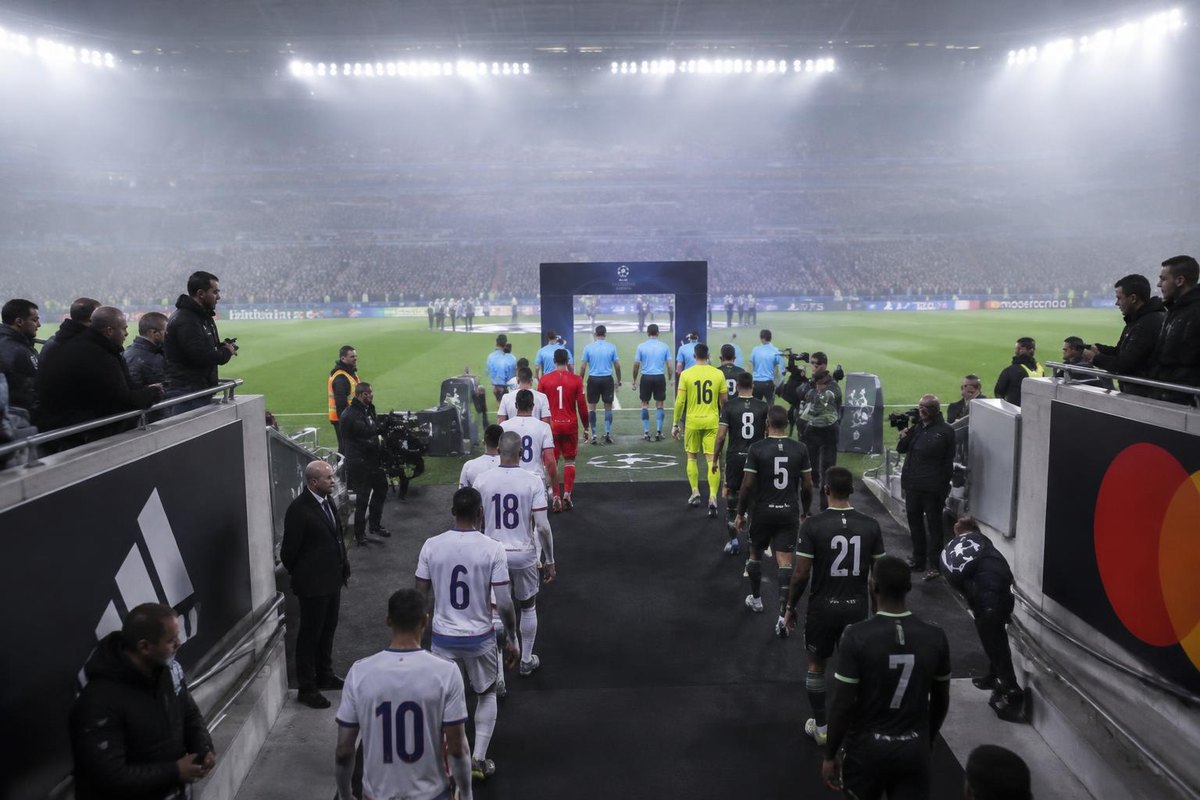
Olympique Lyonnais beat FC Girondins de Bordeaux 4-0 on Sunday 2 March, and I watch it from a bar because I cannot get into Groupama Stadium. The final whistle reaches the room through the television, beneath the clink of glasses and the low talk of people who have already made up their minds about the afternoon. Outside, 59,186 have been inside the ground. My ticket, or the gate, has left me with the other Lyonnais: close enough to hear the reaction, not close enough to see the grass.
The day has not begun with football. It begins with food, as this city prefers to introduce itself: not by making a speech, but by placing something on a plate.
Before the gate
I arrive in Lyon after the long change of direction from Estoril, 1,417 kilometres to the north-east. The journey is a reminder that a column called Away Days is less a promise than a recurring negotiation with distance. By the time I am in the city, the river and the streets have replaced the Portuguese coast, and I am thinking about breakfast rather than timetables.
At a café, I take a tartine and coffee. There is no grand discovery in this; the useful pleasure is the quiet start, the bread warm beneath its butter, the cups placed down with the matter-of-factness of a place that has work to do. I think of Ileana in Cluj, who considers my habit of crossing countries to eat and watch football evidence that I need a sensible hobby. She may be right. It is not yet a reason to stop.
At the market, lunch is a slice of quiche and a small serving of salade lyonnaise. The salad’s bacon and egg make a better argument for the city than any itinerary could. Around me, people shop without turning the market into a performance for visitors. I ask one seller where he will watch the match. He points towards the stadium and says, “If you have a ticket.” He says it lightly. I tuck the ticket away as if it has heard him.
Lyon is not a town that needs football to explain its importance. It is a large working city, shaped by the Rhône and Saône, with an older centre climbing towards Fourvière and the Presqu’île between the waters. Its old trades and newer business share the same streets; the food is part of that continuity, not a decorative extra. The club’s move to this eastern edge puts a different Lyon in view: less the old stone centre than a stadium set among roads and the newer spread of the city.
The ground, from the wrong side
The club’s colours and name carry the memory of its long period at the top, and of the sequence of league crowns that once seemed to make a season’s ending almost predictable. Lyon won the league again in 2062/63, and stands first in Ligue 1 Uber Eats so far this season. Its record of 26 league titles is a fact of scale; it does not make a locked gate any more accommodating.
Bordeaux have their own weight in French football, and their passage between divisions gives this derby a different edge. They have come back to Ligue 1 Uber Eats after winning Ligue 2 BKT in 2058/59, and are 13th so far this season. A rivalry does not need a border or a particular name to make the visiting colours unwelcome. Here, the home supporters are in no doubt what sort of afternoon they want.
At the stadium, the turnstile refuses me. A steward looks at what I show him, then at me, and the conversation ends without drama. There is no point arguing with a gate after it has made its decision. The full house presses around the approaches, scarves and coats moving towards the entrances, while I move away in search of somewhere to see the game. A bar near the ground has room for one more, and a screen above the counter.
The man serving puts down a plate of quenelles de brochet with sauce Nantua. I eat while the teams settle into the match on the television. The dish is soft and rich, the sauce doing most of the talking; the room supplies the rest. A supporter beside me says, “Four goals would be a proper Sunday.” I tell him I hope he is not making a prediction. He shrugs: “It’s only a wish.”
The screen and the room
The first goal comes in the 35th minute. Laureano Fernández drives the ball low and hard from close range, and it rises into the net. The bar answers at once: a shout, hands against the counter, then the quick return to the screen. Fernández once played for Bordeaux, where he made ten appearances and scored no goals. Now, in Lyon colours, he has given the home side the lead in a derby that has not been gentle with his old club in recent meetings.
Stanley Devoy makes it 2-0 in the 42nd minute, heading from close range low and near a post. At the bar, people begin to turn their stools back towards their drinks, though nobody loses track of the screen. The score is no longer a delicate matter. I am glad the quenelle has arrived before the goals; eating while standing amid a room’s sudden celebration is one of the less elegant parts of the travelling trade.
Franck Ekwalla scores in the 47th minute, with a header from close range high through the middle. Then Julio Barone makes it 4-0 in the 67th, a shot with the foot from close range at mid height. The screen gives me the shape of each goal, the bar gives me its noise, and the two do not always arrive in the same order. I miss the little shifts of a live stand: the collective lean, the person in front choosing the wrong moment to stand. There is no substitute for being there. There is, at least, a good view of the plates and an unobstructed television.
Bordeaux had their moments to answer, but the room does not need a full account of the match to know what the score says. On the screen, the Lyon players gather in the familiar glow of the final whistle. Around me, the supporters accept the result as a pleasure rather than a surprise. A man beside the door orders another drink and says, “That is better than the last one.” He means the defeat here last April. It is a short sentence with a year’s worth of memory tucked inside it.
After the whistle
I order a café and a plate of cervelle de canut, the fresh cheese and herbs that make a modest end to a meal feel properly local. The bar settles. The victory has given the room a common subject, but it does not turn strangers into old friends; a few nods and one argument about the referee are enough. Mickaël Etchevers has kept the match moving on the screen, and the talk now moves back to work, food and who is paying.
Lyon remain first in the league, with Tony Roberts in charge since 2063. They have already made the late winter an eventful stretch: six days from now, on 11 March, they are due to host Chelsea in the first leg of a Champions League last-16 tie. That is another competition and another occasion, not a reason to inflate this one. On this Sunday, the work is simpler. Lyon beat a rival by four goals, and a full crowd carries that result home.
I leave the bar after the plates have been cleared. The stadium is still there beyond the road, bright and sealed off from my afternoon in the way a football ground can be when everything has gone right for those inside. I have not seen the match as the supporters in the stand did. I have eaten my way around it, listened to the room make a second kind of terrace, and watched four goals arrive between mouthfuls. Ileana will ask whether I got in. I will tell her no, and that the quenelles were good. Both things are true; the second is not an excuse, though I suspect it will sound like one.