Follow the Line South to Haberfeld
A 2,429-kilometre journey from Florence ends at a small ground in Rishon LeZion, where Hapoel turn a late first-half setback into a 3-1 league win.
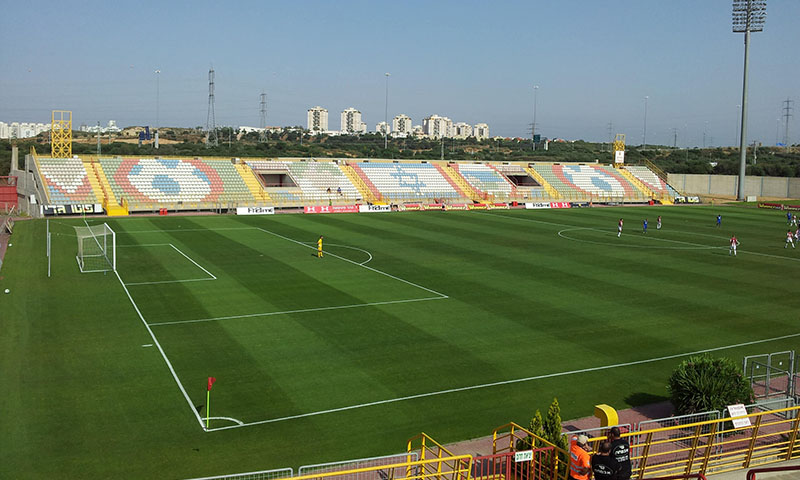
It is 2,429 kilometres south-east from the Stadio Artemio Franchi, and by the time I reach Rishon LeZion on Friday, 2 May, the useful part of the journey is no longer the distance but the change in the air. I have gone from a European night beneath old stone to the open, bright edges of a city south of Tel Aviv. Haberfeld is my reason for being here; the railway, the bus and the food between them are how I arrive.
Rishon LeZion is a working city, not a football set arranged for visitors. Roads and buildings keep their own business, and the ground sits among them without demanding a grand entrance. I take a bus for the last stretch and eat a warm pastry from a bakery counter, standing beside people who have somewhere else to be. The pastry flakes onto my shirt. It is the sort of small inconvenience that does not require a story, though I make a note of it all the same.
At the ground, there are 673 people. The number gives the evening its scale: enough voices to make the stands feel occupied, not enough to hide the gaps. A man near me folds his ticket into a narrow strip and keeps worrying it between his fingers. He has the look of someone who has brought a familiar routine with him. I recognise the feeling. In the little notebook I carry from ground to ground, the page for Haberfeld will be close to the page for Florence, though the two places have little else in common.
Hapoel Rishon LeZion first come up for the 2048/49 season, go down in 2052/53, return in 2054/55 and descend again the following season. The Israeli National League title of 2056/57 brings another promotion, and this time the club stay up through the seasons that follow. The best of that stretch is third in 2060/61; last season they finish seventh, and this season they are eighth so far. There is a title from 1993/94 too, a much older chapter in the same second-tier story.
That history makes Haberfeld feel less like a stop on a ladder than a place a club has had to keep finding its way back to. Hapoel have been up, down and up again; the ground does not pretend that the work is finished. On the other side are Maccabi Ironi Petach-Tikva, whose record in the country’s competitions is more decorated, including nine Israeli National League titles and four Israeli State Cups. But past honours do not take a seat for either side. Tonight’s points belong to these ninety minutes.
I open mine before the game and find a line from an earlier page, written at Rodney Parade on 8 April: “The rain reaches the collar before the turnstile.” Wales is 24 stops ago in the way a traveller counts them, though only a few weeks in the calendar. The sentence is not useful to anyone here. I like that. A ground has to be allowed its own page.
Hapoel begin quickly. An unidentified home player scores after six minutes, a shot with the foot from close range at mid-height. The early goal gives the small crowd a reason to lean forward, and the man with the folded ticket stops turning it over. Maccabi answer in first-half stoppage time. Dudu Ben-Ami scores at 45+1, with the ball going high; there is little to dress up in the description, and no need to.
Mahmoud Atrash restores Hapoel’s lead in the 56th minute with a low shot from close range. Lidor Sardal makes it 3-1 from the penalty spot in the 75th minute, the ball going at mid-height near a post. The final score is a home win in the Israeli Premier League, not a verdict on the season. The crowd’s noise gathers around each goal and thins again between them. I watch from among the home supporters, close enough to hear a few sharp instructions travel across the stand, too far away to pretend I know the words.
He is the club’s leading scorer in the archive, and his name has appeared repeatedly in the seasons when the club have had to rebuild their place in the top flight. Tonight he adds a penalty to that record. Atrash supplies the goal that gives the home side the lead again. The result also fits the run of meetings: Hapoel have won three of the previous six against Maccabi, with two draws and one defeat. In February the sides drew 2-2. This time the last word belongs to Rishon LeZion.
Afterwards I walk out with the crowd and let the streets take over from the match. Nobody needs to explain the result to me; people are already speaking as if the evening has found its proper shape. A boy swings a scarf over one shoulder and nearly clips a man carrying a paper bag. The man protects the bag first. I understand him. Football is important, but dinner is also a commitment.
I write the small things too: pastry crumbs on my shirt, a ticket folded into a strip, the pause in the stand after Maccabi’s equaliser. These details are not a rival account of the football. They are how a place stays particular once the result has been filed away.
On the way back, the city is still moving at its own pace. Haberfeld does not need to be larger than it is. Hapoel have a league win, a season still in progress and a club history made of departures and returns. It is not a great sentence. Most notes are not. But I know where I write it, and that is enough to bring me back here when the pages have grown older.