Wolves owned Wembley; Chelsea inherited England
Carlos Henrique won the Carabao Cup for Wolves as Everton’s defeat confirmed Chelsea as champions—a split-screen ending followed by a revealing blue response.
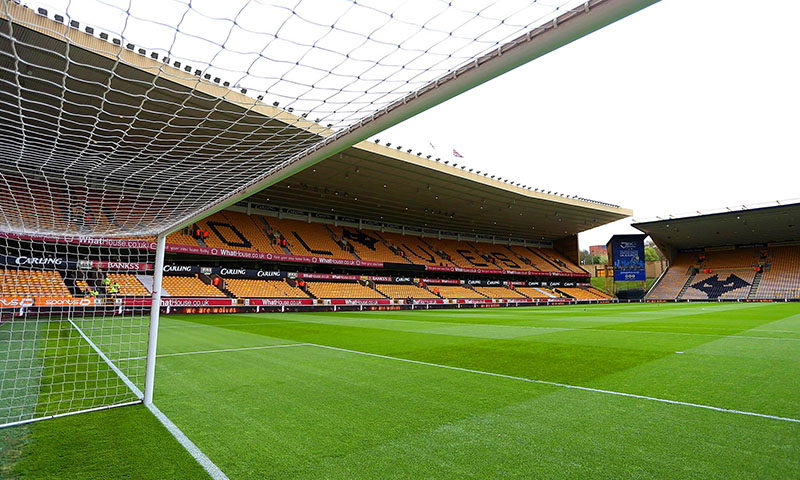
Wembley gave English football two winners and only one celebration.
Wolverhampton Wanderers lifted the Carabao Cup after Carlos Henrique’s 52nd-minute goal defeated Chelsea 1–0. At almost the same moment, news travelled through the stadium that Everton had lost 2–0 to Rotherham. Chelsea’s lead at the top of the Premier Division had become unassailable. The team watching Wolves raise one trophy had just secured another.
It was a suitably strange conclusion to a season Chelsea have spent making certainty look ordinary. They arrived at Wembley unbeaten in the league and accustomed to controlling the terms of every contest. Wolves refused those terms. Petru Ciurel’s side kept 59 per cent possession, completed 632 passes and made the final slower, narrower and less familiar than Chelsea wanted it to be.
The decisive move was simple because the organisation behind it was not. Fernando Álvarez moved the ball to Acoidán López, whose pass found Henrique running into the space beside Chris Dooley. Dooley missed the interception. Henrique ran clear and slid his finish into the far corner.
Finals reward the action that remains when all the other actions have been forgotten. Wolves managed only four shots, but three were on target. Chelsea produced 12 attempts and 1.33 expected goals, yet Rodrigo Abregú denied Lionel Messi in the first half and later repelled Roberto Baggio. Wolves did not survive through panic. They protected the lead with composure, retaining the ball often enough to deny Chelsea the sustained siege that usually breaks opponents.
For Henrique, the scorer, the goal fitted a career built around useful timing rather than celebrity. He joined Wolves from Flamengo for €15.75 million in 2053 and has remained through the club’s modern rise: Carabao Cup winner in 2060, Europa Conference League winner in 2061, Europa League winner in 2062 and now a second League Cup in 2063. His Wembley finish was the latest decisive entry in a decade of service.
For Chelsea, the emotional arithmetic was harder. Calin Dimario’s players left the pitch as champions of England and runners-up at Wembley. Their 41st consecutive league title was confirmed on an afternoon when they had been made to feel unusually mortal. The league table reflected their authority—Everton’s defeat settled it—but the final reflected football’s resistance to inevitability.
The important question was what Chelsea would do next. Dynasties are not tested only by the defeats that threaten their position. They are tested by defeats that cannot take the larger prize away, when disappointment might be dismissed as a minor administrative inconvenience.
Chelsea’s answer was controlled. Four days later they beat Nottingham Forest 2–0 at Drogba Arena. Howard Parkins carried the ball through three defenders before finishing low into the far corner, and Messi struck the underside of the bar for the second. Forest were pushed so deep that the match became an exercise in Chelsea recovering their normal geography.
Three days after that came the FA Cup quarter-final at Southampton. This time the resistance lasted longer. Chelsea had 21 shots and placed 11 on target, but Victor Moldovan kept the game goalless until the 79th minute. Chris Dooley found Jairzinho, who drove down the right, beat two defenders and crossed low for Marcelo Formicola to score from close range.
The sequence matters. Chelsea did not respond to Wembley with anger disguised as recklessness. They responded with two clean sheets, two wins and a place in the FA Cup semi-finals. The goals came from Parkins, Messi and Formicola; the winning move at Southampton was created by two substitutes. Their depth remained less a list of famous names than a method of finding another answer.
Yet Wolves’ victory should not be reduced to a brief interruption in Chelsea’s story. They became the first team this season to take a domestic final from the champions, and they did so by rejecting the assumption that survival required surrendering the ball. The win belonged to tactical nerve as much as defensive courage.
That is why the afternoon at Wembley will survive beyond the trophy photograph. Wolves showed that Chelsea can be made uncertain. Chelsea discovered, almost simultaneously, that uncertainty had not stopped them winning England again.
The spring now separates into two arguments. Chelsea pursue the Champions League and FA Cup with the league already secured. Wolves carry silverware and the knowledge that the country’s dominant side can be beaten when the occasion is understood properly.
At Wembley, the gold shirts ran towards the cup. The blue shirts heard they were champions.
Only one side had won the match, and for once that was enough to own the day.