491 goals, 90 trophies: the weight of Peter Mutiu
A career that never needed a second act, only the slow understanding that nothing after it could feel the same.
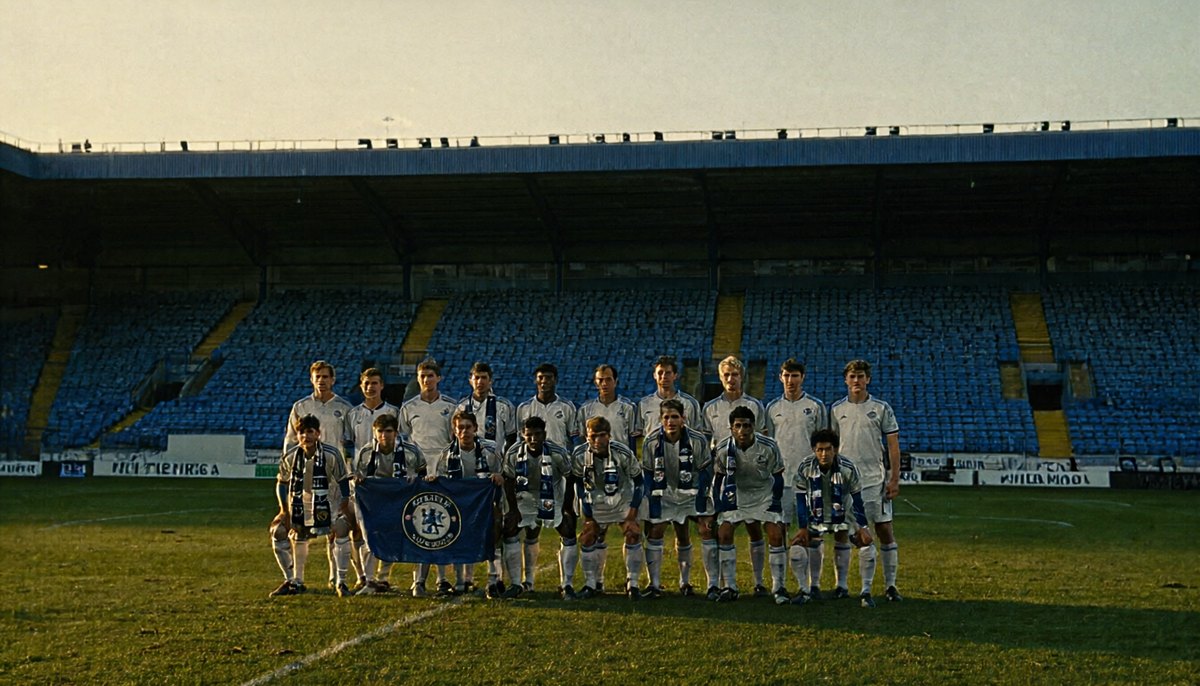
There was a time, before the first of those 491 goals, when the question was not whether he would score but how long the waiting would last. It followed him from the academy pitches, through the reserve sides, into that first Chelsea dressing room in the summer of 2032. Peter Mutiu arrived with the kind of expectation that usually breaks young men. Instead, he made it look like a promise kept.
He played 1,018 club matches across three clubs, but the first and longest love was Chelsea. Eighteen seasons, 752 games, 400 goals. Those numbers do not describe the feeling of watching him in full flight, the way a match could tilt on the angle of his shoulders, the sudden stillness before the burst. He won sixteen English Premier Division titles, sixteen Community Shields, thirteen Carabao Cups, twelve FA Cups, twelve Champions Leagues, eleven Super Cups. Ninety trophies in all, a haul that blurs into the architecture of the modern game. But trophies are only the echo. The sound itself was the goals.
He scored 491 of them for his clubs, and another 118 in 195 international appearances. The individual awards arrived early and often: the Golden Boy in 2033, the NXGN twice, the Premier Division's top scorer in 2034, the World Cup's best young player that same summer, the Champions League's young player of the season in 2035, the World Under-21 Footballer of the Year twice. They were markers of a talent that refused to plateau, a career that moved from prodigy to institution without ever seeming to pause.
There was a loan to FC Nantes in 2048/49, a strange interlude of 47 games and 17 goals, as if he needed to prove he could score in a different shirt, under a different sky. Then the move to Real Madrid FC in 2049/50, where he played 219 times and scored 74 more. The goals came slower there, or perhaps the defenders knew him better, or perhaps the years had begun their quiet arithmetic. He retired after the 2053/54 season, nine years ago now, and the game has moved on in his absence. But some absences are louder than presences.
Think of him now and what remains is not a single goal but a pattern: the late runs into the box, the clipped finishes, the penalties stroked with the calm of a man closing a book. He was never the loudest player on the pitch. He let the ball do the shouting. In an era when football has grown ever more frenetic, his patience feels like a relic, a thing to be remembered rather than imitated.
There are others in the record books now, names that glitter with their own impossible numbers. Paul Malcolm's 830 goals, Joe Haigh's 860, Carl Pritchard's 571, Franco Maradona's 372. The game does not lack for legends. But Mutiu's 491 goals came with an elegance that statistics cannot hold. He was the player you watched when the ball was not near him, because you knew it would find him eventually. It always did.
And now, in the long quiet after the final whistle, what is left is the weight of those numbers, the way they sit in the memory like stones in a river. 491 goals. 90 trophies. A career that never needed a second act, only the slow understanding that nothing after it could feel the same.