Rouxel's 403 Goals Were Never the Whole Story
Twenty years after Grégory Rouxel's last season, the numbers still look like a mistake — and the trophies still explain why they were not.
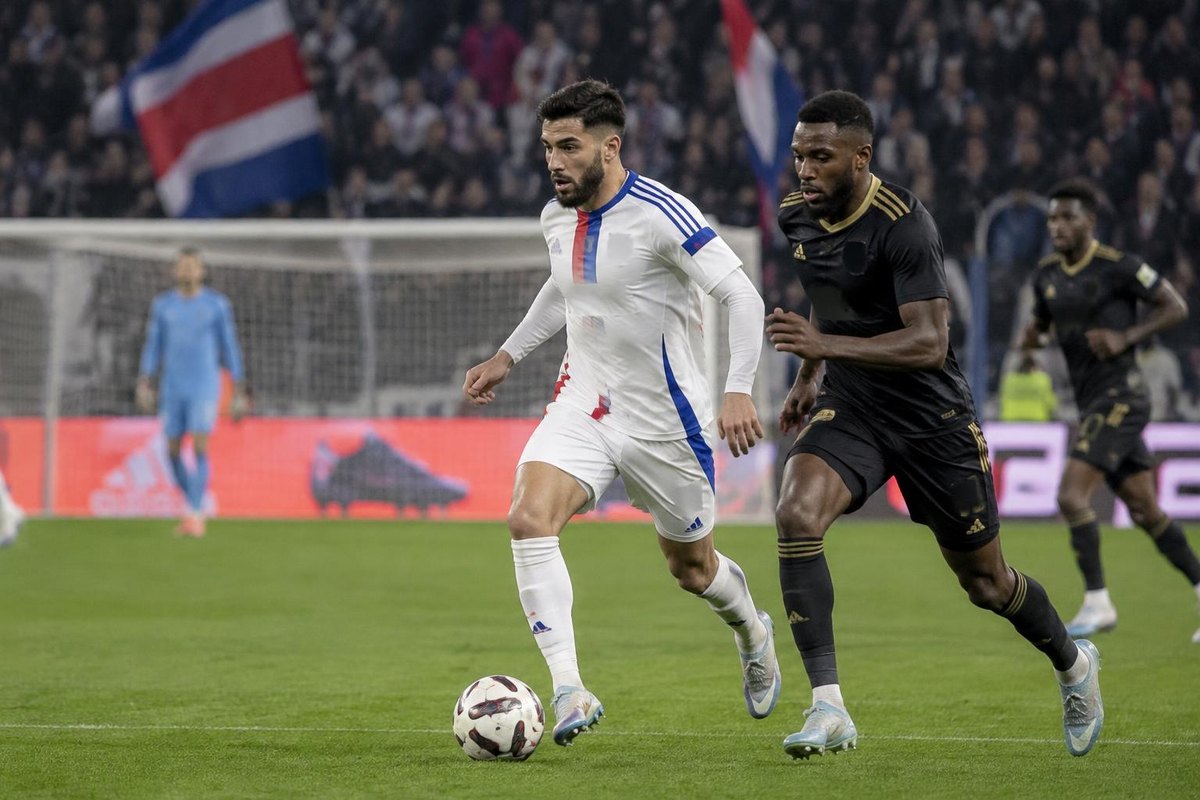
The ball came back off the post and for a moment nobody moved. It was a night at Nantes early in his time there, the second team, the sort of evening when the stands are half full and the floodlights seem to hum louder than the crowd. Rouxel was seventeen, or thereabouts, and he had already learned the trick of arriving where the rebound would be rather than where the shot had been. He put it in. The small crowd made a small noise. Somewhere in the records, a number went up by one.
That is how it starts, most of the time. Not with a statement but with a habit.
The habit became 403 club goals in 777 club games, spread across three shirts and a career that ran from 2022/23 to 2043/44. He scored 41 in 60 games for FC Nantes 2 between 2023/24 and 2025/26, then 26 in 74 for the first team as the seasons turned. Olympique Lyonnais took him in 2028/29, and there he stayed until 2044/45, 643 games and 336 goals, a decade and a half of the same patient arithmetic. Add 116 caps and 59 goals for the national team and the ledger closes at a figure that still reads like a typing error.
But a striker's totals are only half a life. The other half is what the team did around him.
Six Ligue 1 titles. Four French Cups. Five Trophées des Champions. One Ligue 2 title, from the early Nantes years, when the climb was still ahead. And an Olympic gold, the one that sits apart from the club list because it belongs to a summer rather than a season. Seventeen trophies in all, and individual recognition that came in waves rather than all at once: top scorer at the French Youth Invitational in 2024, then Ligue 1 top scorer in 2029, again in 2033, again in 2040, with the Champions Trophy's best player award in 2035 and 2037.
The spacing tells its own story. He was not a phenomenon who burned for three seasons and left a scorch mark. He was a centre-forward who kept being there, through changes of teammates and managers and styles, and kept being the one the ball found.
There is a temptation, twenty years on, to treat a career like his as a single long plateau. It was not. The Nantes years were a climb; the Lyon years were the summit, and the summit lasted so long that people stopped noticing it was a summit at all. When a club wins six leagues across a career, the titles begin to blur into one another, and the man who scored in so many of them blurs with them. That is the price of consistency: it looks like weather.
What the numbers cannot show is the texture. The way a crowd leans forward when a certain player receives the ball with his back to goal. The half-second of silence before a shot that everyone in the ground has already decided will go in. Rouxel had that, for the better part of two decades, and Lyon grew used to it in the way you grow used to a landmark you pass every day.
Twenty years is a long time in football. Long enough that the current Lyon side, top of Ligue 1 after fourteen games and preparing for a Champions League night against Internazionale Milano this week, plays in a world he never knew. The club he left has changed hands, changed styles, changed generations. The seven straight league crowns of 2054/55 to 2060/61 came after him; so did the three French Cups in a row from 2053/54 to 2055/56, and the Trophée des Champions run of 2060/61 to 2062/63 that ended this season with Lyon as runners-up. He is not the last chapter. He is an earlier one, and the book has kept going.
That is the honest way to remember him: not as a record waiting to be broken, but as a standard that a club spent years trying to meet again. The 403 goals are the headline. The seventeen trophies are the argument. And the small noise in a half-full ground, long ago, when a rebound came off the post and a boy was already there — that is where it began.