Barcelona break Valencia with a late drive and go three from three
Mariño's low strike from distance settles a derby that swung both ways, after Sekulić levelled from the spot on the stroke of half-time and Márquez had the visitors dreaming of another January.
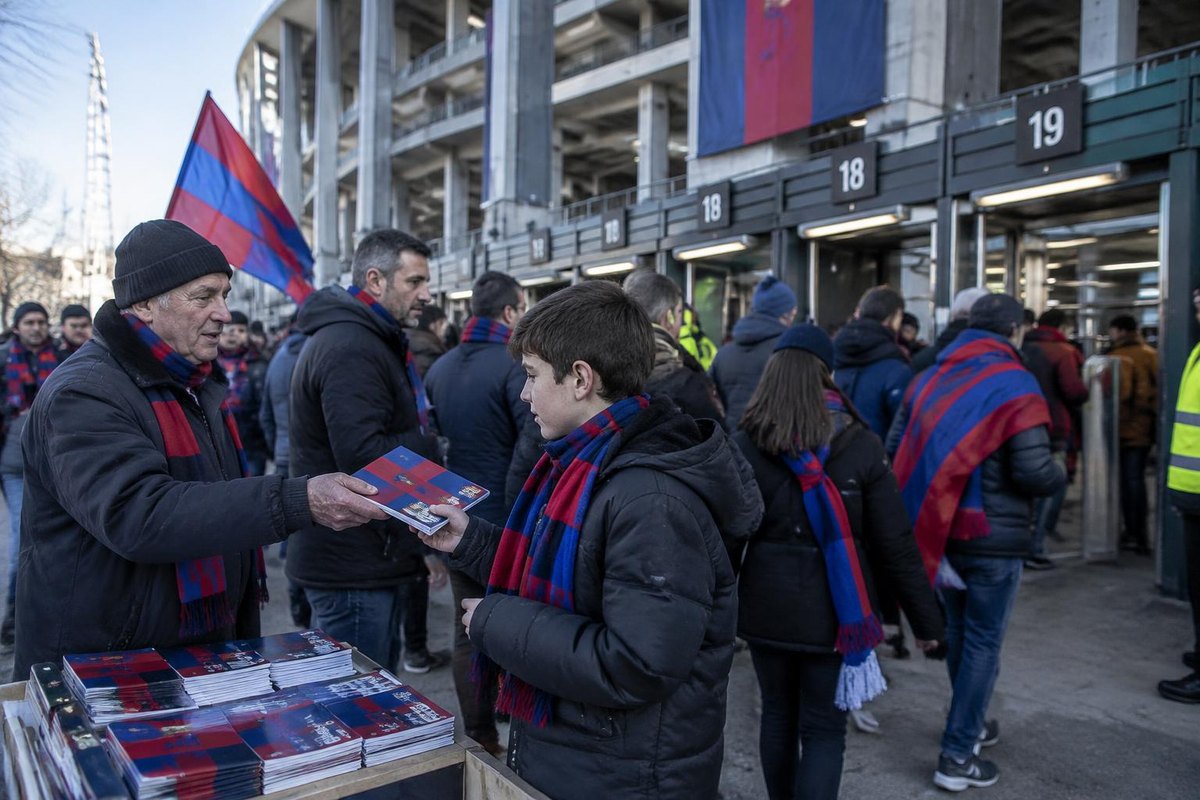
There was a wound to be dressed at the Camp Nou last night, and Barcelona dressed it the way they dress most things these days: with the ball, with noise, and with a young man's boot. Valencia had come to Catalonia carrying the memory of New Year's Eve's eve — that 3-0 in January that still sits in Barcelona's stomach — and for 45 minutes it looked as though the old script might be read out again.
What was at stake was simple enough. Barcelona, champions in 2062 and then ninth and restless, have started this season as though somebody has opened the curtains: 4-1 against Bilbao on the opening night, then that 1-0 win at Athletico Madrid on 17 August, and now this. Three wins from three, nine points, top of the Spanish First Division. Valencia arrived with two wins of their own and left with the knowledge that the gap between the sides is narrower than the table will read.
The night began with the visitors' teeth showing. On 17 minutes Alfonso Márquez — 33 now, in his fifth season at Valencia after all those years at Real Betis — came in off his flank and struck one high and hard past the near post. The Camp Nou went quiet in that particular way it does, the way of a crowd that has seen this before and fears it knows the ending. Márquez has two league goals already this season and he wore the look of a man who has decided that August is his.
Barcelona had changed their shape for the night, four across the middle instead of their usual arrangement, with Javier Iglesias out and two summer arrivals from Oviedo — Thomas Holler and the loanee Javier — asked to hold the width. Holler ran himself into the ground and made his five dribbles count; Javier collected a booking on 21 minutes and left to a warm ovation on the whistle. Luiz, once of Valencia, and Tiago Bentes watched the whole thing from the bench.
The equaliser came in first-half stoppage time, and it came from the spot. Danijel Sekulić, who had spent the evening breaking up play and starting it again, put the penalty away, and the stadium exhaled. Sekulić finished with five interceptions and a distance covered that would embarrass a postman; his was the engine in the machine.
Valencia had their chances. Robert had five shots and could not find the net, and twice in the evening the woodwork came to Barcelona's rescue. Daniel Saldaña made five saves at the other end, three of them parried and one turned round the post, and for long stretches the game sat on a knife's edge between two sides who have spent years taking turns to hurt each other — the 0-0 of August 2062, the 3-2 that February, the 4-1 in 2061 — and who know, in the way of old rivals, exactly which buttons to press.
Then, on 72 minutes, Andreu Mariño took the ball and drove it low and hard from outside the area, high into the net, and the Camp Nou came apart. Mariño, a right winger by trade and a centre-forward by deployment these last two games, had his goal; a minute later he was off, Giulio Roventini on in his place. He had been the best of them on the night, with two key passes and three shots, and the noise that followed him to the touchline told its own story.
Valencia threw on Alcaraz and Tohăneanu, then Villanueva, and finished in a shape of their own invention with three at the back and nothing to lose. It was not enough. Alessandro Jiménez's whistle — a busy one, five bookings, three of them Catalan — closed a derby that had everything but a twist at the end.
Afterwards the talk in the stands was of a Barcelona that has remembered how to win ugly as well as well, and of a Valencia that will be a nuisance to everyone this season. For now the Catalans lead the league by two points from Real Madrid FC, with Vigo and Atlético Pamplona lurking on six.