Samoa’s Long Wait for a Different Ending Continues
A quiet journey to Papeete Community Park ends with Papua New Guinea winning 2-0, extending a run of results that Samoa have yet to break.
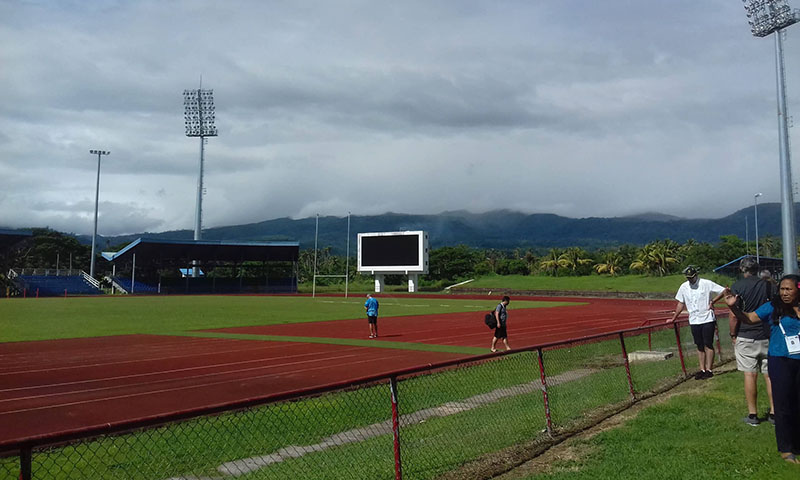
The bus from Apia does not need to be persuaded to stop for football. A man with a folded programme tucked into his shirt asks the driver, and the rest of us follow him off near Papeete Community Park. The ground is small enough to find without ceremony; the crowd, 3,401 by the turnstiles, gives the afternoon its shape before the teams appear. I have come for Samoa against Papua New Guinea in the Oceania Nations Cup, on Saturday 14 June. There is no long procession from a station, no stadium district to cross. The road, the people going to the match and the ground seem to belong to the same ordinary day.
I take the morning bus from the centre of Apia, watching shops give way to houses and green hills beyond them. The Pacific is never far from the sense of direction here, even when it is not in view. At a roadside stall I eat a warm piece of bread with coconut, standing beside a woman who has brought her grandson to the match. He has a small flag folded into his pocket. She tells me he is meant to keep it there until there is something to celebrate. It is a sensible arrangement, and one he does not have to revise before half-time.
The name Papeete Community Park sends the mind towards Tahiti, but I am in Samoa, on the ground named for this stop. There is no need to make the name carry more than it can. Around the pitch the practical details are close at hand: a modest stand, shade where the trees allow it, food for sale beyond the entrance. A vendor has a pot of fish and coconut milk and serves it into a container with the concentration of a person who knows the sauce will find any loose corner. I eat before going through the gate. The match is international, but the welcome is local and unceremonious.
A run without a new page
There is a particular weight to this fixture because the earlier meetings have not offered Samoa a different ending. They have lost all six of the previous games between the sides. The older scores carry their own periods of hope and reversal, but together they make a clear line. Samoa have yet to finish one of these meetings ahead, or level.
This is not a history I need to explain to the man beside me in the stand. He knows the shape of it already. When I ask whether the occasion feels different this time, he looks across the pitch rather than at me. “You have to come and see,” he says. There is no complaint in it, and no promise either. The answer suits the place: the match must be played again, in front of the people who have come to watch it.
The crowd is not trying to imitate a larger stadium. People talk between the bursts of noise; children move along the edge of the seating, then are called back. A paper tray of food passes down a row, the person receiving it making room without looking away from the pitch. The sound gathers when Samoa have the ball. It does not become a wall of noise, but it is present and attentive, with the particular intimacy of a small ground where every reaction is easy to hear.
Papua New Guinea have a young goalkeeper, Rodney Airis, starting in goal for the first time in the reports, and Freddy Kaven, also 18, beginning as their striker for the first time. These are modest facts in a day that belongs to the teams rather than to any one debut. Airis is busy enough to make the stand aware of him. Samoa have the greater share of possession, moving the ball with patience, but Papua New Guinea bring more threat to the game. The difference is not in how long either side keeps the ball. It is in what happens when the play reaches the part of the pitch where a score becomes possible.
Two moments before the break
Papua New Guinea score in the 27th minute, a low shot with the foot from close range. The crowd’s response is brief and plain: a sound from the visitors’ supporters, then the movement of people settling again. Samoa continue to have the ball, and the home crowd continue to look for a reason to raise their voices. There is nothing theatrical about the afternoon. It is a game being watched closely, with the first goal now asking Samoa to find an answer.
The second comes in the 43rd minute. Another shot with the foot, this time along the ground, and Papua New Guinea reach the interval two goals ahead. The timing matters in the stand. People had been holding the game open in their minds, as supporters do when one goal still leaves room for an afternoon to change. Now they leave their seats for food and conversation with the score already settled into the break. A boy takes his flag out of his pocket, looks at it, and folds it away again.
Samoa keep possession through the match, but the advantage in the ball does not become an advantage on the scoreboard. Papua New Guinea defend the lead and remain the more dangerous side. The visitors’ goalkeeper has work to do, and the home crowd have a few reasons to lean forward, but neither team changes the score after the interval. At the final whistle, the score stands at 0-2 to Papua New Guinea. It is their seventh victory over Samoa in the meetings between them; Samoa have still not drawn or won one.
A result that travels home
The game takes less time to describe than the journey to it, which is often true of an away day. I leave the ground with the crowd and walk back towards the road, where the buses and ordinary traffic make their separate claims on the afternoon. Someone has a container of food balanced carefully in one hand. A group of young men talk about the result without raising their voices. There is no grand exit, only people making their way home with what the match has given them.
I have travelled here from Pakistan, where my last stop was Punjab Stadium on 6 June. That was a goalless afternoon between Pakistan and Tajikistan, a match in which the crowd waited without being rewarded by a score. Here there are goals, but they belong to the visitors. The contrast is useful only up to a point. Each ground has its own measure of silence and noise, and each crowd goes home with its own account of what it has seen.
I think of the woman at the roadside stall and her grandson’s flag, still folded when I last saw it. Nothing in the result asks him to pretend the afternoon has gone another way. Samoa have again lost to Papua New Guinea, and the figures of the earlier meetings remain part of the next time these teams meet. But 3,401 people have come to this small ground to see the game for themselves. The bus back is full of conversation, and the road through Apia is busy in the ordinary way. By the time I reach the centre, the match has become one more story travelling home with its witnesses.