Sutton's grim day as Derby roll through
A wet December afternoon in the third tier, and the gap between a side fighting the drop and one chasing promotion is written in four goals and a quiet ground.
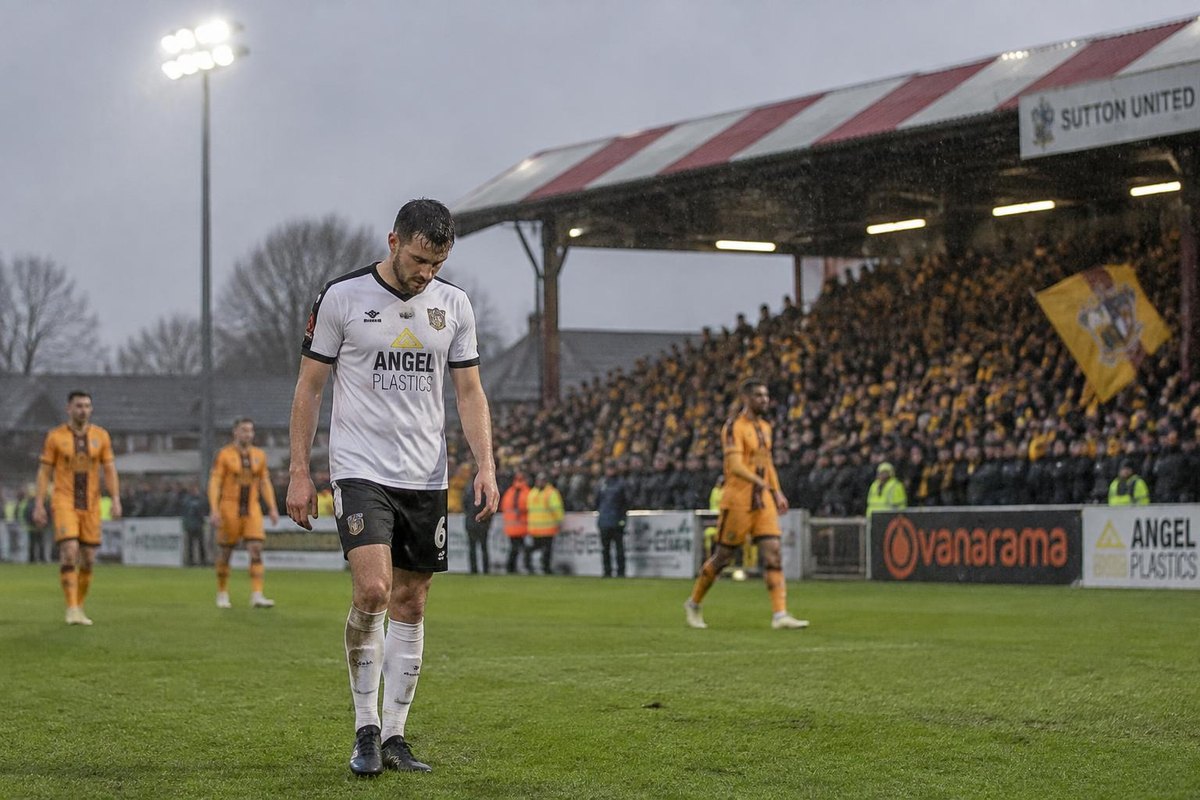
The train from London runs south through the grey edge of the capital, past the brick terraces and the open ground of the Wandle Valley. It is a short journey, twenty minutes or so, and it costs a few pounds. At Sutton station the rain is coming down in that steady English way, the kind that soaks a coat before you have walked a hundred yards. The ground is a fifteen-minute walk from the station, up the high street and past the shops, and even at half past two the pavements are full of people in amber and chocolate, the old colours of Sutton United, walking with their collars up and their hands in their pockets.
Sutton is a town that has grown into a suburb, but it still has a centre of its own. The high street runs up from the station, past the old banks and the newer coffee shops, and there is a market square where the stalls are packing up for the day. The town was built on the London to Brighton road, and for a long time it was a place where coaches stopped and horses were changed. The railway brought the commuters, and the town spread out in the twentieth century, but the centre has kept something of its old shape. The ground is tucked away behind the high street, down a side road and past a row of houses, and the floodlights rise above the roofs like the masts of a ship in a narrow harbour.
The club has been here since the late nineteenth century, when a group of young men from the town formed a football team. They played on a field behind a pub, and for years they moved from ground to ground, never quite settling. The club's nickname is the U's, and their colours are amber and chocolate, a combination that has been theirs since the early days. The famous day came in the FA Cup, when a top-flight side came to Sutton and were beaten in one of the great shocks of the competition. The ground was packed that day, the old wooden stands full and the crowd spilling onto the touchlines. The club has never reached the top flight, but it has had its moments, and that Cup run is still talked about in the town.
The Paul Doswell Stadium, as it is now called, has been the club's home for more than a century, and it has changed a good deal over the years. The old main stand is still there, a low brick building with a pitched roof and wooden seats, and the terrace opposite is covered, with a roof that slopes down toward the pitch. Behind one goal there is a new stand, built a few years ago, and behind the other a small open terrace where the away fans are gathered. The ground holds just over eight thousand, and today it is nearly full. The ticket cost twenty-two pounds, which is about average for this division. The pitch is green and well kept, and the floodlights are already on, cutting through the rain.
I eat before the match in a pub on the high street, a place where the club was founded. The food is simple and good: a pie with mashed potatoes and peas, and a pint of bitter. The pie is steak and ale, the pastry thick and the filling hot, and it costs twelve pounds. The pub is full of Sutton supporters, and the talk is of the season so far. Sutton are twenty-second in the table, two points from safety, and today they are playing Derby County, who are third. The mood is not hopeful, but it is not despairing either. "We've been worse than this," a man in a flat cap says to me. "We've been down in the National League and come back. We'll be all right."
The first half is a story of Derby's control and Sutton's resistance. The visitors have the better of the early play, passing the ball around the back and through midfield, and Sutton are content to sit deep and break when they can. In the sixteenth minute Derby take the lead. A cross from the right is headed clear, but only as far as Ziya Duman, who is standing on the edge of the penalty area. He takes a touch and hits a low shot through a crowd of players and into the bottom corner. The Derby fans behind the goal celebrate, and the Sutton supporters fall quiet. For the rest of the half, Sutton defend well, and Derby do not create many clear chances. Daniel Reid, the Sutton striker, goes off injured in the thirty-fifth minute, which is a blow, but the home side hold on until the break.
At half-time the score is 1-0 to Derby, and the rain is still falling. I buy a cup of tea from the kiosk under the stand, and it is hot and sweet, and it costs two pounds. The second half is a different story. Derby come out with more urgency, and in the forty-eighth minute they score again. Jamie Chadwick, the Derby midfielder, picks up the ball thirty yards from goal and hits a shot that swerves away from the goalkeeper and into the net. It is a fine goal, and the Derby fans sing. Sutton try to respond, and they have a few half-chances, but the Derby goalkeeper is rarely troubled. In the seventy-first minute Chadwick scores his second, a header from a corner, and the game is over as a contest. Jean Yves Ekwalla, who has come on as a substitute, scores a fourth in stoppage time, a low shot from the edge of the area.
The final whistle goes, and the Sutton players walk off with their heads down. The Derby fans are still singing, and the home supporters are already streaming out of the ground. It has been a hard afternoon, and the gap between the two sides has been clear. Sutton have worked hard, but they have not had the quality to trouble Derby, and the scoreline is a fair reflection of the game. The walk back to the station is quiet, the rain still falling, and the lights of the town reflecting in the puddles. It is a long way from the sunshine of Pescara, where I watched Delfino Pescara on Christmas Eve, and a long way from the heat of Qatar and the noise of Seoul. But this is the heart of the English game, and there is something honest about it, even in defeat.
The train back to London is full of Derby fans, and they are in good voice. They have seen their team win well, and they are already talking about the promotion race. Sutton are left to fight on, and they will need to find something more if they are to stay in this division. But the club has been through worse, and the supporters will be back for the next home game, hoping for a better day. The rain has stopped by the time we reach London, and the city is bright with Christmas lights. It has been a good trip, even if the football was one-sided, and the memory of the pie and the pint in the pub will stay with me for a while.
Away Days, trip 7. Sutton, England. December 29, 2063.