Sîrbu's 466 Goals Were Never the Whole Story
Eighteen years after Alin Sîrbu's last season, the numbers still say one thing and the career says another.
The scoreboard remembers what the eye forgets. Four hundred and sixty-six goals in 844 club games is the kind of figure that settles an argument before it starts, a total so round and so large that it seems to explain itself. Then you look at the six trophies, and the two things refuse to sit quietly together. A striker who scored at that rate should have a cabinet that groans. Sîrbu's does not. That gap, more than any single season, is the shape of him.
He began in Romania, at FC Ripensia Timişoara, in 2024/25, and the early years were a scatter of clubs and half-seasons: 13 goals in 21 games there, then ACSM Politehnica Iaşi from 2027/28 to 2029/30, where 31 goals in 78 games hinted at something without yet proving it. Feyenoord Rotterdam came and went in 11 games. SC Cambuur gave him a season of 26 goals in 36. Only at sc Heerenveen, in 2031/32 and 2032/33, did the scoring become a habit rather than a burst: 37 in 59.
PSV Eindhoven was where the habit turned into a reputation. From 2032/33 to 2034/35 he scored 47 in 88, and twice the Willy van der Kuijlen-trofee came his way, in 2032 and 2033. There was an Eredivisie title in that time, one of the six. It was the sort of spell that makes a big league come calling, and RB Leipzig did, from 2034/35 to 2038/39. There he scored 98 in 177, and in 2038 came the UEFA Europa Conference League Golden Boot. Leipzig was not where the trophies piled up, but it was where he learned to carry a side.
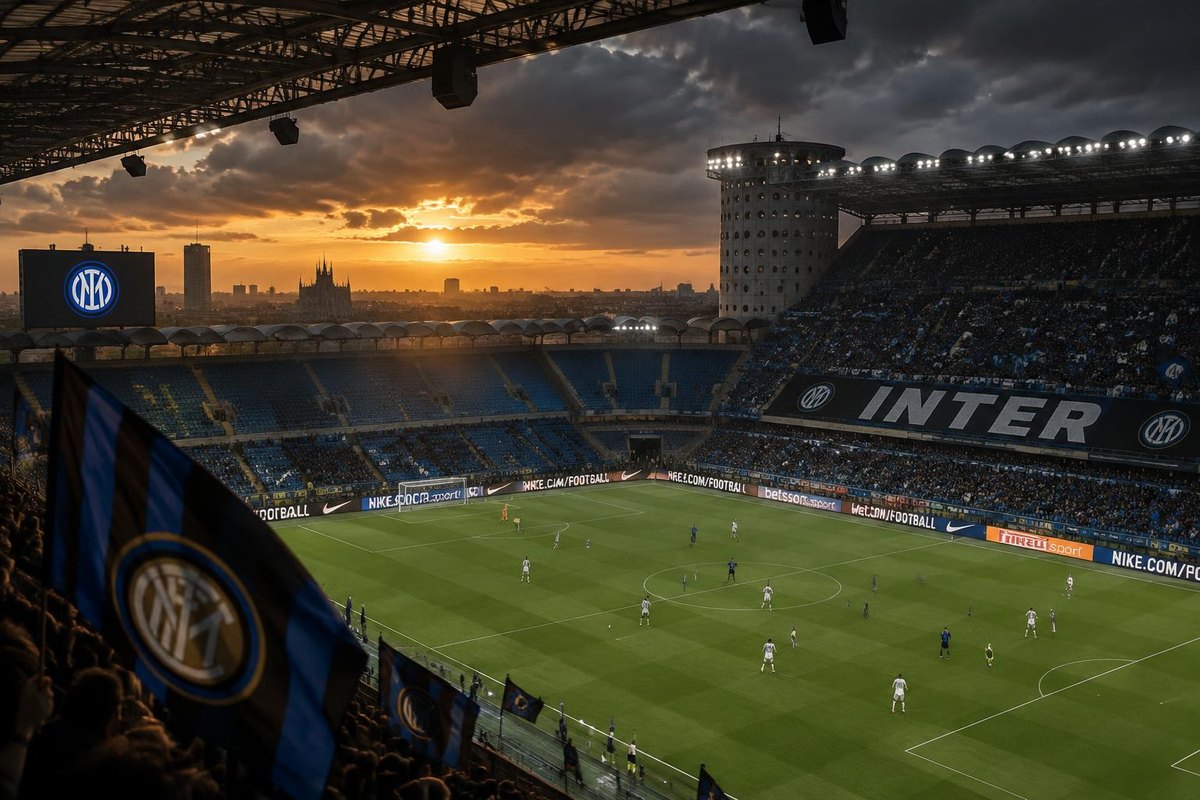
FC Internazionale Milano, from 2038/39 to 2046/47, is the chapter that gets told most often, and on the plain numbers it deserves to: 209 goals in 374 games. Two Italian Serie A titles, an Italian Cup, an Italian Super Cup and the Conference League of 2038 sit in that decade. He was Serie A's top goalscorer in 2044, its best striker that season, and in 2041 the Premio Gentleman Serie A recognised something beyond the scoring. In 2043 his own country named him Romanian Player of the Year. For Romania he played seven times and scored once, a thin return that says more about the teams around him than about the man.
Eighteen years have passed since his last season. Inter, who once strung five Serie A titles together from 2005/06 to 2009/10, are top of the table again this autumn after thirteen games, and the temptation is to measure him against that. It would be the wrong measure. Sîrbu was never the striker of dynasties. He was the striker of seasons: a Golden Boot here, a top-scorer's crown there, a Gentleman award for how he carried it. Six trophies across a career of 466 goals is not a failure. It is a portrait of a man who scored more than his teams won, and who kept scoring anyway.