Italy’s Group, Romania’s Crown
Italy are top of the European Football Championship 2064 field, but holders Romania make Group A a contest with little room for carelessness.
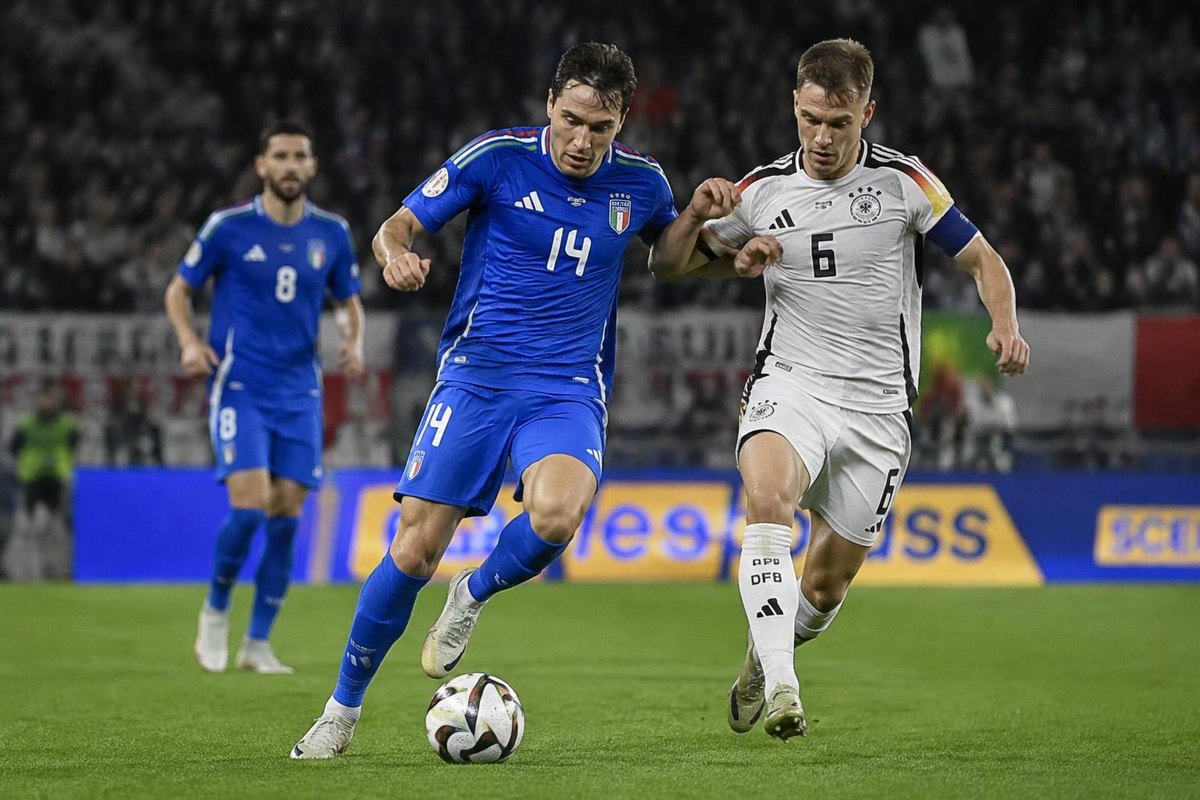
1 of 24 is Italy’s place in the field by standing. It is the clearest starting point for Group A, not a passage through it: Romania, ranked fourth, arrive as holders, while Ukraine and Greece sit 20th and 22nd. The first two have the strongest claim to progress; the lower-ranked pair will need to make every meeting count if they are to disturb that order.
Italy begin against Greece on 13 June, the opening day of the European Football Championship 2064. The schedule gives them no gentle build-up: Romania meet Ukraine the following day, and then Italy and Romania face each other on 18 June, after Greece play Ukraine. That meeting between the group’s two highest-ranked sides may shape the race, but it comes before the final round and cannot settle it alone.
The Italians’ familiar names are spread across clubs abroad and at home: Luca D’Urso is at Al-Ittihad Club Jeddah, Davide Vitagliano at FC Internazionale Milano and Christian Colombo at Al-Hilal Saudi Football Club. Chelsea also have a place in the story, with Roberto Baggio in Italy’s squad and Panagiotis Papadopoulos representing Greece. Their presence gives an Italian club angle to an opener in which Italy will be expected to impose its authority, not merely rely on reputation.
Romania’s standing is not a decorative detail. They are the holders, ranked behind only Italy in this field, and have three prominent names based at major European clubs: Ştefan Gârlonța and David Mândrescu at Olympique Lyonnais, and Nadin Suller at FC Bayern München. Their clash with Italy is the group’s obvious hinge, a meeting of the top-ranked side and the champions, but the fixture list leaves no space for either to treat the other games as formalities.
Ukraine have Orest Solomakha at SL Benfica and Alexandr Gadjimuradov and Serhiy Romanchuk at Shakhtar Donetsk. Greece’s best-known players include Paraschos Manariotis of Middlesbrough, Tomás Samios of FC Sochaux-Montbéliard and Pagonis Marigos of Olympiacos SF Piraeus. The gap in standing makes them outsiders, not harmless opposition. Greece meet Ukraine on 18 June; both then face a final test against one of the leading pair on 22 June, with Ukraine playing Italy and Greece meeting Romania.
Italy’s route is Greece, Romania, Ukraine; Romania’s is Ukraine, Italy, Greece. The ranking points towards Italy and Romania going through, but Ukraine and Greece have direct opportunities to unsettle the forecast, and the compressed schedule will punish any lapse of concentration.
The 2062 World Cup final showed Italy able to endure a contest that kept turning; this group asks for a different discipline, over three matches rather than one. For the holders, control begins with protecting their crown against the field’s top-ranked side. For Italy, the task is to make first place mean something on the pitch. The tournament starts on 13 June. Group A’s central test arrives five days later.